
Understanding USDA Hardiness Zones
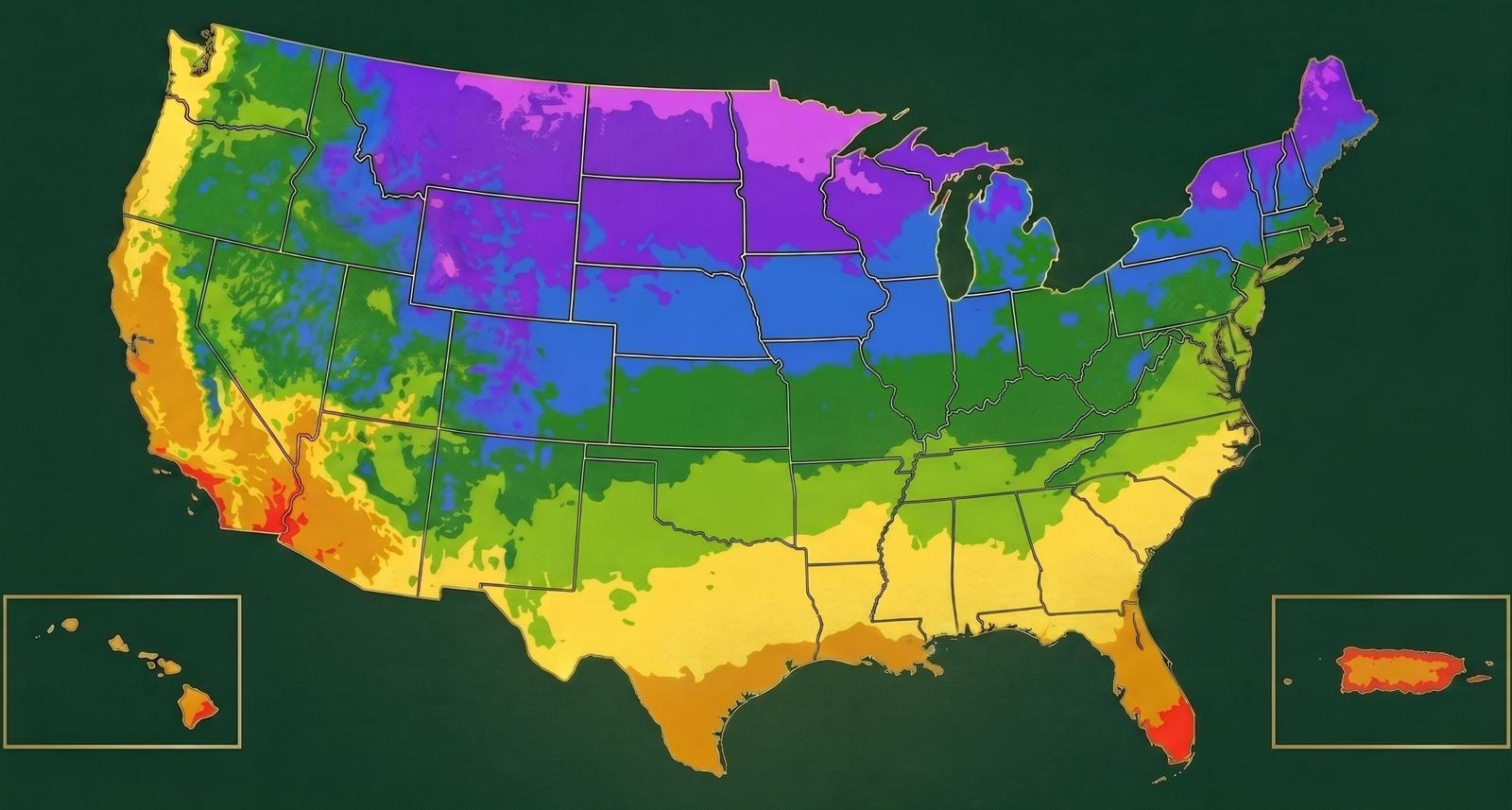
USDA Hardiness Zones Legend
USDA Plant Hardiness Zones serve as the standard benchmark for plant cold tolerance across the United States. Find your local zone on the map above to better understand which plants may tolerate your area's typical winter minimum temperatures.
What Hardiness Zones Represent (and What They Don't)
Hardiness zones are calculated strictly on the average annual extreme minimum winter temperature for a given location in 10°F (and 5°F subzone) increments. They indicate whether a plant can survive outdoor winter lows in the ground.
Key Factors Outside the Hardiness Zone Rating:
- Summer Heat & Duration: Zones do not measure peak summer heat, heat index, or night cooling.
- Sun Exposure & Microclimates: Direct intense sun vs sheltered canopy shade creates dramatically different moisture and heat stress.
- Humidity & Air Circulation: Tropical humidity preferences vary greatly regardless of minimum winter temperatures.
- Container Growing vs In-Ground: Container roots lack the thermal mass and insulation of ground soil and can experience colder root temperatures during cold snaps.
Zones 8b & Below
Cold-hardy perennials or indoor houseplants. Tropical specimens require winter indoor overwintering or heated greenhouse protection.
Zone 9a – 9b
Mild winters with occasional brief freezes. Suitable for cold-tolerant tropicals and gingers with winter protection when temperatures drop.
Zone 10a – 11+
Subtropical to tropical conditions with rare frost. Supports year-round in-ground tropical growth for warm-climate species.
Our Nursery Growing Context (St. Petersburg & Tampa Bay)
Our nursery in Pinellas County operates in USDA Zone 10a. We grow and acclimatize our specimens in local Florida conditions so they arrive robust and ready for container growing indoors or outdoor in-ground planting in suitable hardiness zones.